
Introduction
In today’s highly competitive digital marketplace, visual content plays a critical role in influencing customer decisions. Businesses are constantly looking for innovative ways to showcase products more effectively and this is where 3D product rendering comes in.
From eCommerce brands to manufacturers, companies are shifting from traditional photography to advanced 3D visualization to create immersive, engaging product experiences.
In this guide, we’ll explore what 3D product rendering is, how it works, and the key advantages it offers in modern product marketing.
What Is 3D Product Rendering?
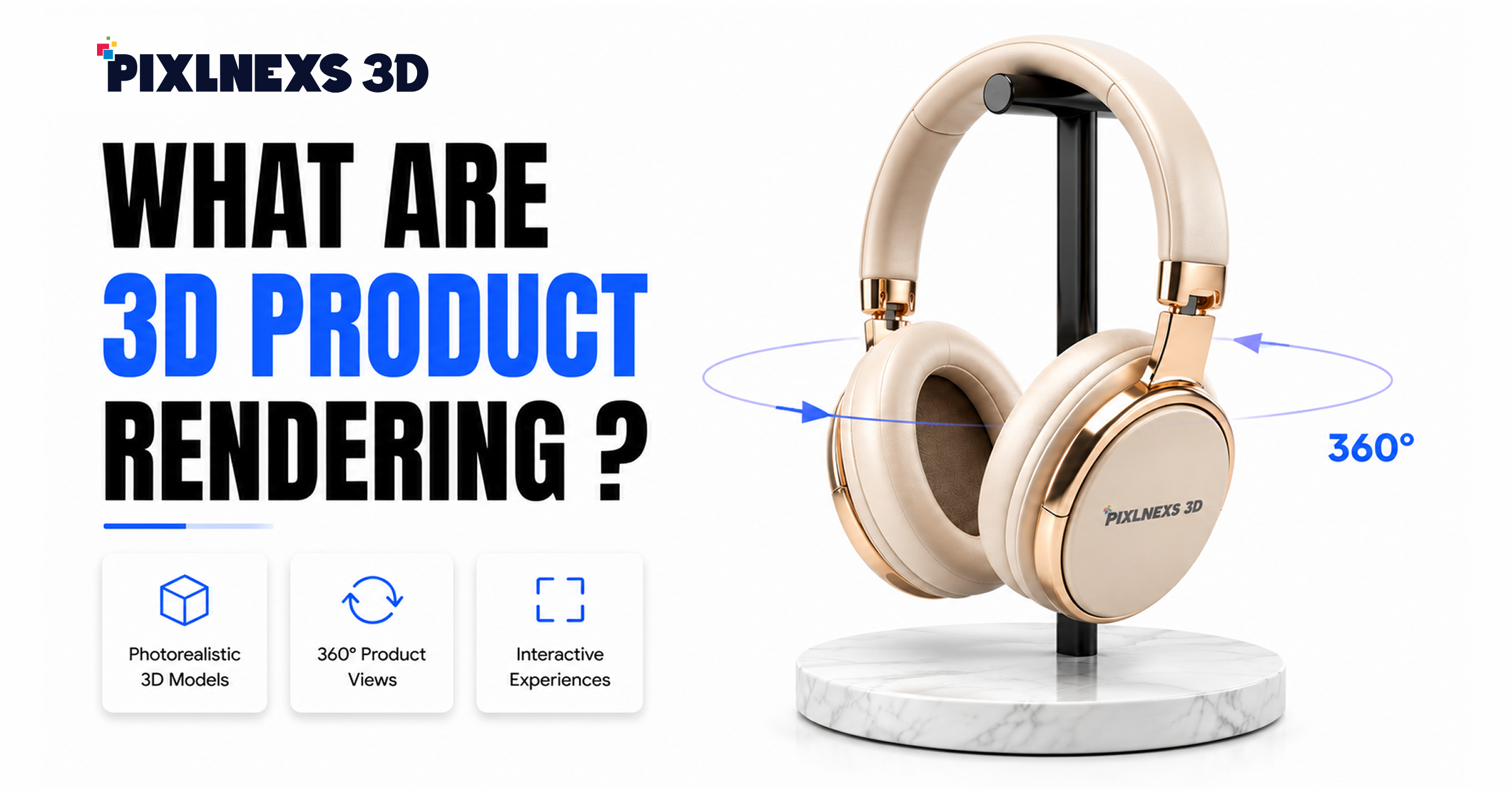
3D product rendering is the process of creating realistic digital images or animations of a product using 3D software. Instead of capturing a product through a camera, designers build a virtual model and render it into high-quality visuals.
These renderings can include:
- Static images (like product photos)
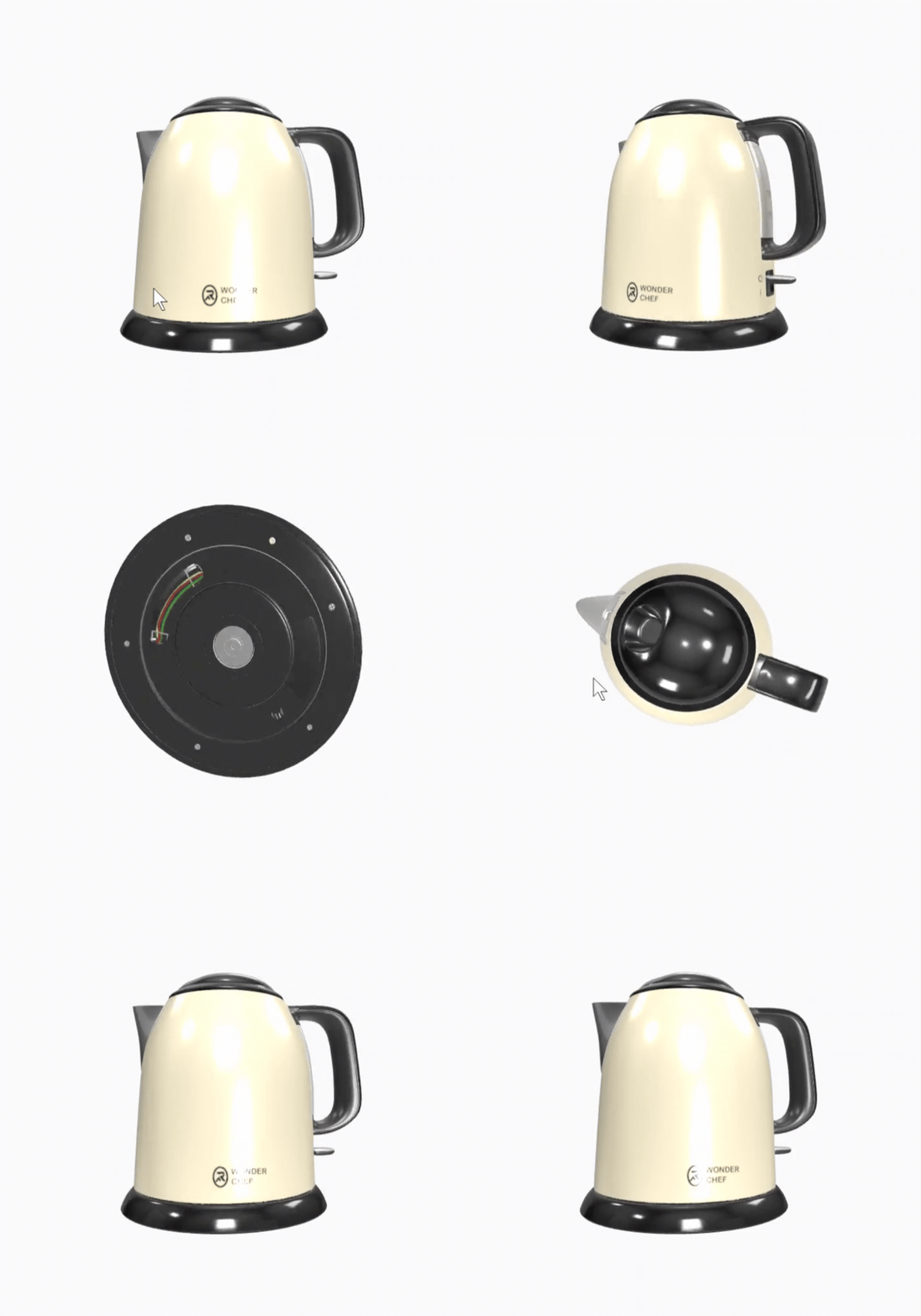
- 360-degree views
- Interactive 3D models
- Animations and AR-ready assets
This technology allows businesses to present products in a visually stunning and highly customizable way—without the need for physical prototypes.
How Does 3D Product Rendering Work?
The process typically involves the following steps:
1. 3D Modeling
A digital model of the product is created using CAD or 3D design software.
2. Texturing & Lighting
Materials, colors, and lighting are applied to make the product look realistic.
3. Rendering
The final image or animation is generated using rendering engines like Blender, V-Ray, or Unreal Engine.
4. Post-Processing
Enhancements are made to refine visuals and optimize them for marketing use.
Advantages of 3D Product Rendering in Product Marketing
1. Cost-Effective Compared to Traditional Photography
No need for expensive photoshoots, studio setups, or physical prototypes. Once the 3D model is created, it can be reused endlessly.
2. Faster Time to Market
Products can be visualized even before manufacturing is complete, helping brands launch campaigns earlier.
3. Unlimited Customization
You can easily showcase:
- Multiple colors
- Different materials
- Various configurations
Without reshooting anything.
4. High-Quality, Consistent Visuals
3D renders ensure consistent lighting, angles, and quality across all platforms—perfect for branding.
5. Interactive & Immersive Experience
With 360° views and interactive models, customers can explore products in detail, increasing engagement and conversion rates.
6. Better Customer Understanding
Clear and realistic visuals reduce confusion, returns, and improve customer satisfaction.
7. Scalable for eCommerce Growth
Whether you have 10 products or 10,000 SKUs, 3D rendering scales easily across catalogs.
3D Product Rendering vs Traditional Product Photography
| Feature | 3D Product Rendering | Traditional Photography |
| Cost | One-time investment | Recurring costs |
| Flexibility | Highly customizable | Limited |
| Speed | Faster updates | Time-consuming |
| Scalability | Easy | Difficult |
| Interactivity | Yes | No |
Use Cases of 3D Product Rendering
3D rendering is widely used across industries:
- eCommerce – Product pages, ads, and marketplaces
- Furniture & Interior – Virtual staging and customization
- Electronics – Exploded views and product demos
- Fashion & Accessories – Virtual try-ons and variants
- Automotive – Configurators and product showcases
Why 3D Product Rendering Is the Future of Product Marketing
Consumers today expect more than static images—they want immersive and interactive experiences. With advancements in AR, VR, and WebGL, 3D rendering is becoming a standard in digital commerce.
Brands that adopt 3D visualization gain a competitive edge by:
- Increasing engagement
- Improving conversion rates
- Reducing returns
- Enhancing brand trust
Best Practices for Using 3D Rendering in Marketing
To get the most out of 3D product rendering:
- Optimize images for fast loading (SEO benefit)
- Use alt text with target keywords (e.g., “3D product rendering for eCommerce”)
- Integrate interactive viewers on product pages
- Leverage renders in ads, social media, and landing pages
- Combine with AR for enhanced user experience
Conclusion
3D product rendering is transforming how businesses present and market their products online. It offers unmatched flexibility, cost efficiency, and visual appeal compared to traditional methods.
As digital experiences continue to evolve, investing in 3D rendering is no longer optional—it’s essential for brands looking to stay ahead in product marketing.









Leave a Reply