
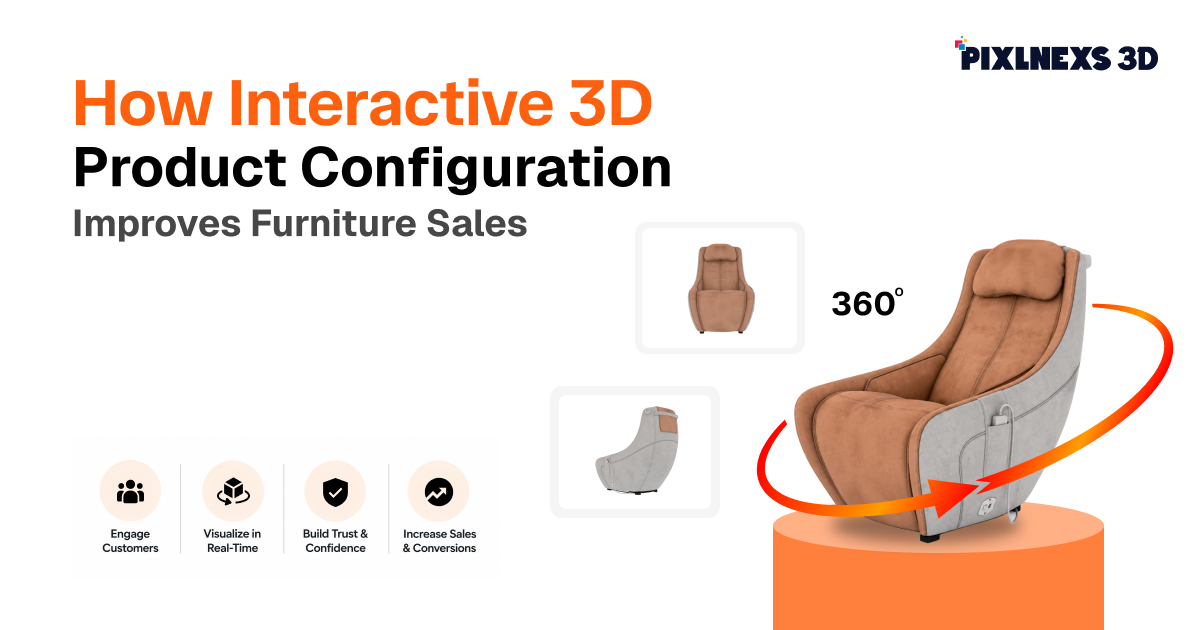
Interactive 3D configuration lets furniture shoppers rotate, customize, and preview products in real time before buying and it’s been shown to lift conversions by reducing the uncertainty that causes cart abandonment. Here’s how it works and why furniture brands are adopting it.
A 2017 study by Perq, surveying more than 9,000 consumers across 30 retail furniture websites, found that 70% of consumers shopping for furniture begin the process online. Source: PGM Solutions
Revolutionizing Shopping with Interactive 3D for furniture Experiences
As online shopping continues to dominate the furniture industry, businesses face a challenge: how can they provide customers with enough confidence to buy without physically experiencing the product?
The answer lies in 3D Product Configuration and Augmented Reality (AR) innovative technologies that are reshaping the way furniture brands sell online and offline.
Why Traditional Product Images Are No Longer Enough
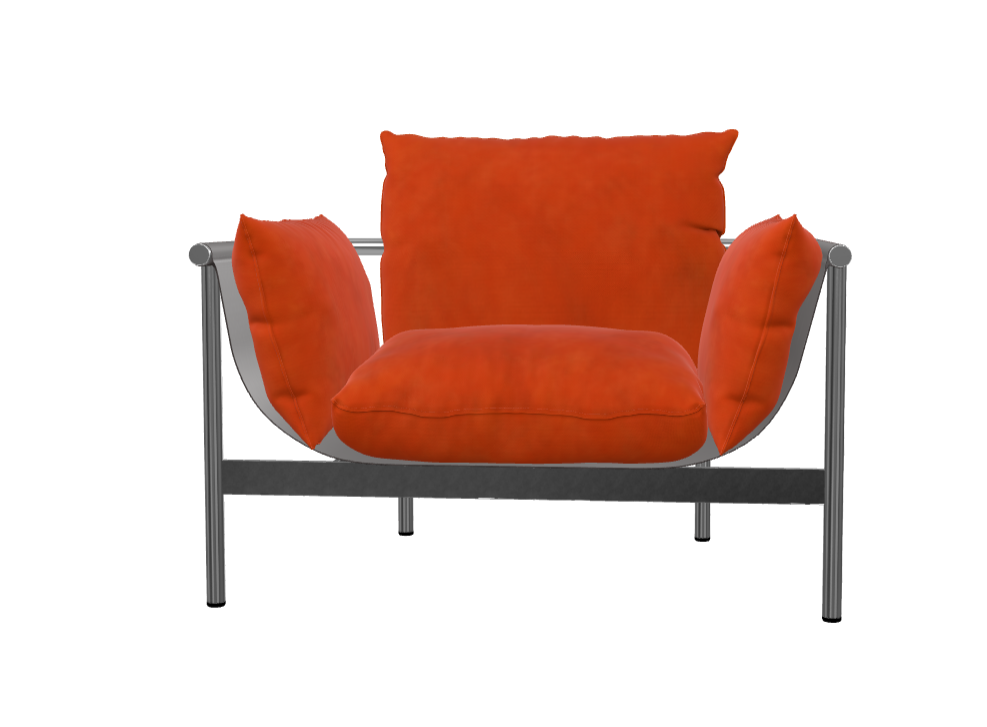
High-quality product images remain essential, but modern consumers expect more than static visuals. They want to interact with products, explore customization options, and visualize how furniture will fit into their homes before purchasing.
A 3D product configurator allows customers to:
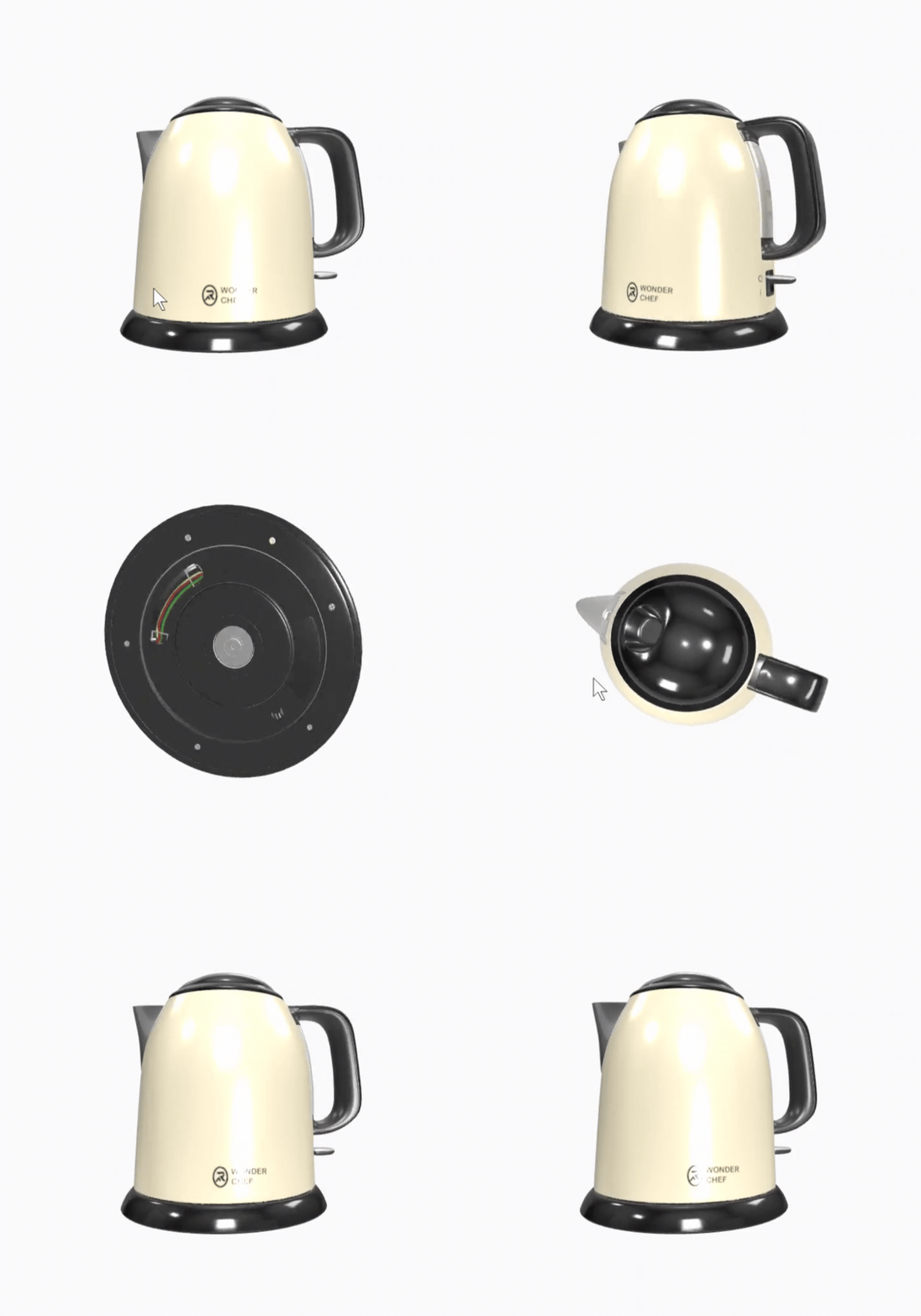
- Rotate and inspect products from every angle
- Customize colors, materials, textures, and finishes
- Explore product variations instantly
- View products in real-time without waiting for additional images
- Make more informed purchasing decisions
Instead of passively browsing product galleries, customers become active participants in the buying journey, creating a more engaging and memorable shopping experience.
Read More: How Brands Have Used 3D eCommerce in 2026
Enhancing Customer Confidence and Increasing Conversions
One of the biggest obstacles in furniture eCommerce is uncertainty. Customers often hesitate because they cannot physically interact with the product.
Interactive 3D configuration removes this barrier by giving shoppers a realistic representation of the product they are considering. When customers can personalize and visualize their preferred options, they gain greater confidence in their purchase decisions.
The result is:
- Higher conversion rates
- Reduced cart abandonment
- Improved customer satisfaction
- Faster purchasing decisions
By offering a highly immersive shopping experience, furniture brands can create stronger customer trust and increase sales performance.
Driving Better Customer Engagement Across Channels
Today’s customer journey is rarely linear. A shopper may discover a product online, visit a showroom, compare options on mobile, and eventually complete the purchase later.
3D product configurators help businesses connect these touchpoints seamlessly.
Customers can:
- Continue product customization across multiple devices
- Save their preferred configurations
- Share designs with family members or decision-makers
- Engage with products both online and in physical stores
This omnichannel approach provides valuable customer insights while creating a consistent and personalized buying experience.
Augmented Reality: Bringing Furniture into the Customer’s Home
Imagine allowing customers to place a virtual sofa in their living room before making a purchase.
With Augmented Reality, this becomes possible.
AR technology works alongside 3D product configuration to help customers visualize products directly within their real world environment using smartphones or tablets.
Benefits include:
Accurate Space Planning
Customers can see how furniture fits within their available space before ordering.
Better Design Decisions
Users can compare colors, styles, and layouts to match their existing décor.
Reduced Purchase Anxiety
Customers gain confidence knowing exactly what to expect upon delivery.
Lower Return Rates
When buyers know how a product will look and fit beforehand, costly returns decrease significantly.
For furniture brands, AR creates a competitive advantage while improving overall customer satisfaction.
Streamlining Product Development and Manufacturing
The advantages of 3D configuration extend far beyond customer engagement.
For manufacturers and furniture designers, digital product visualization significantly simplifies the design and approval process.
Instead of producing multiple physical prototypes, teams can:
- Review designs digitally
- Test material combinations instantly
- Validate product variations before manufacturing
- Collaborate remotely with stakeholders
This results in:
- Faster product development cycles
- Lower prototyping costs
- Improved operational efficiency
- Reduced design revisions
By leveraging existing CAD models, manufacturers can transform technical designs into photorealistic interactive experiences without extensive additional resources.
Improving B2B Sales and Dealer Networks
Furniture manufacturers often rely on distributors, retailers, and showroom partners to showcase products. Traditionally, this process involves producing and shipping numerous physical samples.
3D configurators dramatically reduce this dependency.
Retail partners can:
- Explore every product variation digitally
- Visualize finishes, fabrics, and materials instantly
- Present customized options to customers
- Make informed bulk purchasing decisions
This creates substantial savings in:
- Sample production costs
- Shipping expenses
- Inventory management
- Showroom space requirements
At the same time, dealers gain powerful sales tools that improve customer engagement and accelerate decision-making.
Our pixlnexs case study
Carxneo, Kvalit
Reducing Returns and Improving Customer Satisfaction
Returns are one of the most expensive challenges in furniture eCommerce.
Many returns occur because customers receive products that differ from their expectations in terms of size, appearance, or suitability.
By combining 3D configuration with AR visualization, customers gain a realistic understanding of the product before purchase.
This leads to:
- More accurate expectations
- Better purchasing decisions
- Reduced return requests
- Higher customer satisfaction rates
For businesses, fewer returns mean lower operational costs and increased profitability.
Future-Proof Your Furniture Business with Pixlnexs
The future of furniture retail is interactive, immersive, and customer-centric.
3D Product Configuration and Augmented Reality empower customers to visualize, customize, and confidently purchase products while helping businesses streamline operations, reduce costs, and increase sales.
At Pixlnexs, we create advanced 3D visualization, product configuration, and AR solutions that help furniture brands deliver exceptional digital experiences.
Whether you’re a furniture manufacturer, retailer, or eCommerce business, our interactive 3D technologies can help you:
- Increase customer engagement
- Improve conversion rates
- Reduce product returns
- Simplify design and manufacturing workflows
- Strengthen B2B and B2C sales processes
Partner with Pixlnexs and unlock the power of interactive 3D product experiences that drive growth, improve customer satisfaction, and keep your business ahead of the competition.









Leave a Reply